Insights from our construction administrators to help align operations, design teams, and long-term performance
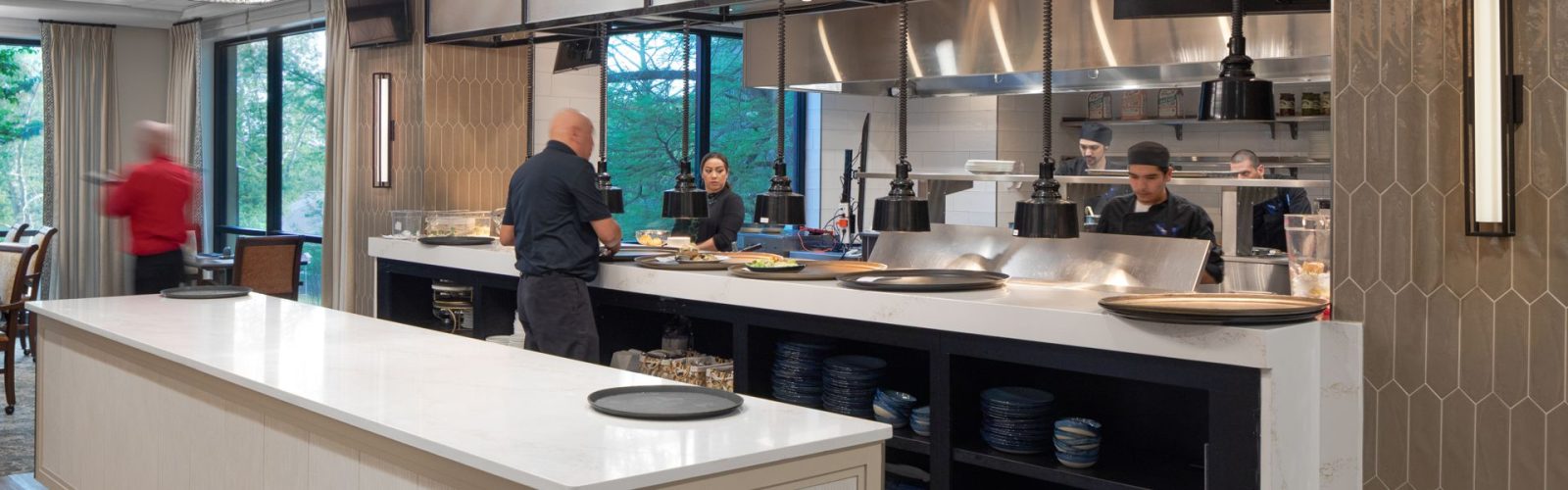
In Life Plan Communities, food service is a cornerstone of daily life, social connection, and overall resident satisfaction. Yet behind every successful senior living dining environment is a complex web of decisions that must align: from menu and staffing to equipment, infrastructure, and day-to-day operations.
Our goal is to continually bring field insights back into the master planning and design process to help communities make informed, forward-looking decisions, ultimately aligning design intent with real-world operations. The following are important takeaways:
- What our construction administrators see on job sites related to senior living food service design
- Recommendations for Life Plan Communities (LPCs) and their design teams to proactively address the common issues we find
We also want to acknowledge our food service consultants who are a crucial team member for valuable insights and input regarding ever-evolving food service equipment and menu trends. Their involvement is often instrumental for getting the details right in many of the examples below.
The most common food service design challenges in Life Plan Communities include misalignment between menu and equipment, insufficient kitchen clearances, poorly coordinated code requirements, and underestimating the complexity of bar and beverage systems.
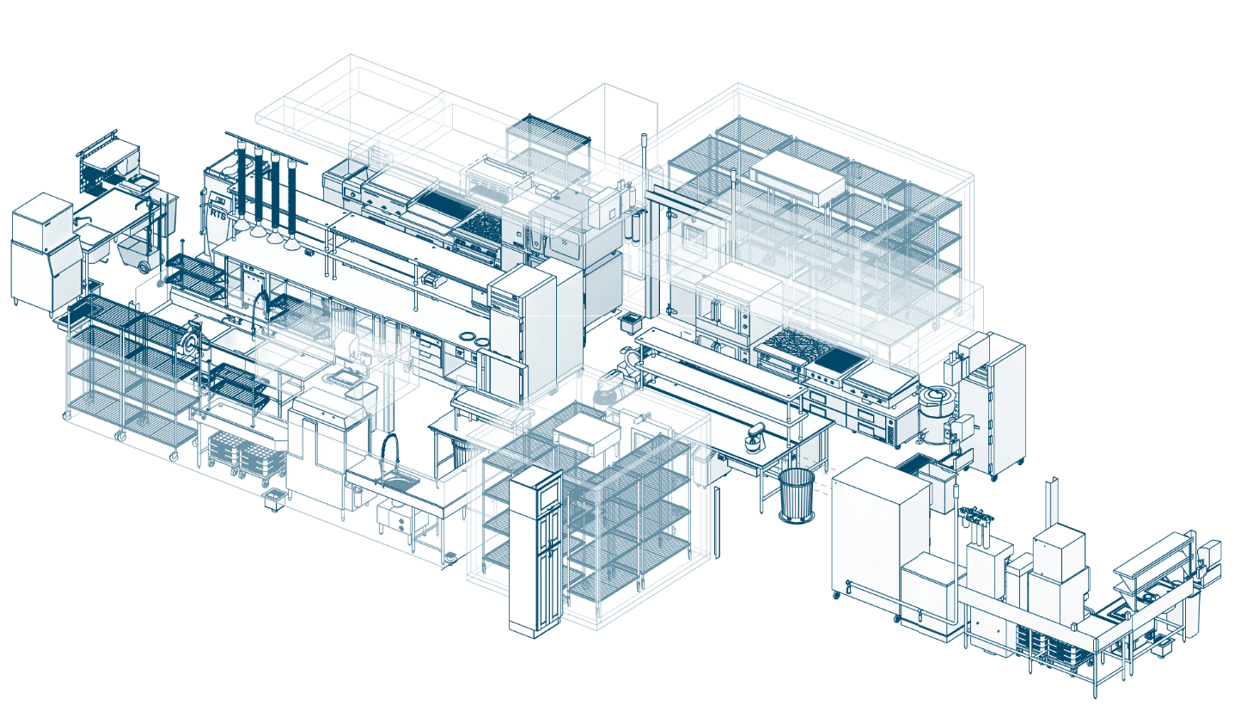
Food service design is a complex part of the building requiring close coordination across disciplines.
1. Life Plan Community Food Service Design Starts with the Menu
No matter how thoughtfully designed a space may be, it will fall short if it doesn’t support the desired menu offerings. Especially in the case of a renovation, it’s important to be aware of and inform your design team of planned menu changes as early as possible.
Recently, a kitchen was in the final stages of construction when the food service team realized they couldn’t make fried food items. The original design was based on the previous menu for the venue which did not require a fryer.
A late decision to add something as simple as a fryer doesn’t just mean adding equipment. It can trigger:
- Hood extensions or rebalancing of exhaust systems
- Additional fire suppression coverage
- Increased electrical load
- Adjustments to make-up air systems
What this means for LPCs:
Early alignment around culinary vision is critical to efficient, cost-effective design. Confirm menu direction as soon as possible—not just conceptually, but at the level of cooking methods (frying, grilling, baking, etc.), as each has direct mechanical and building code implications.
2. Kitchen Layouts Need Built-In Tolerances
Commercial kitchens are often designed to be as compact as possible to maximize program in resident-facing spaces. However, kitchens often don’t get built exactly as drawn. We encourage design teams to maintain generous clearances in primary work aisles and assume at least minor dimensional creep in final installation.
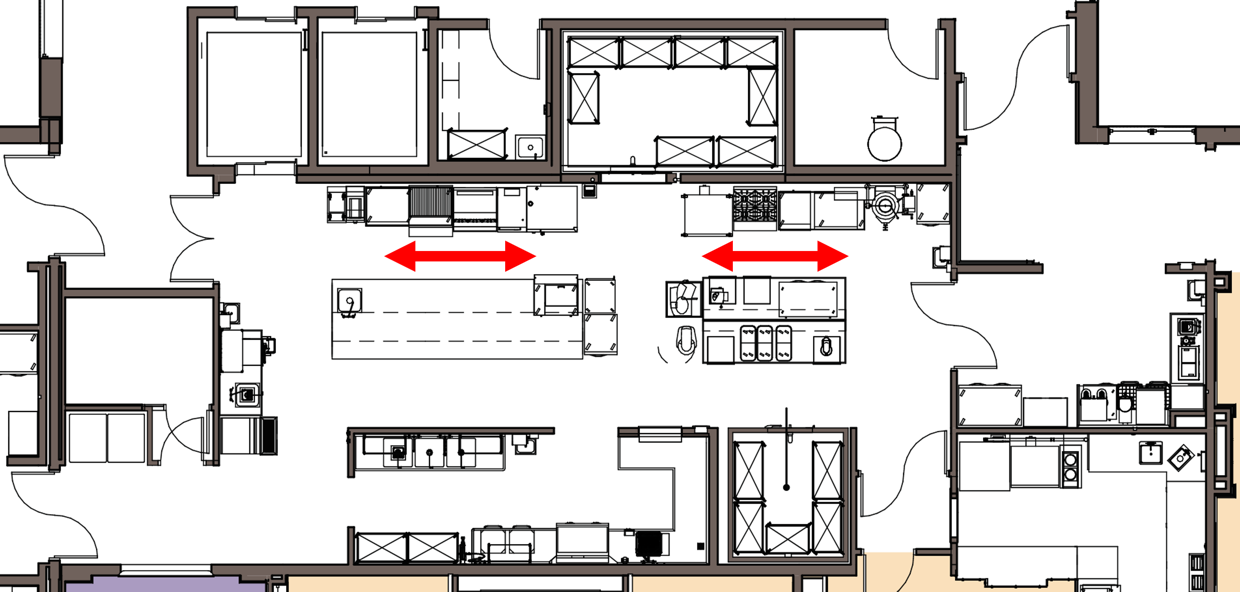
Consider working clearances and functions at cooking and prep areas.
Field realities include:
- Equipment substitutions (often slightly larger than the originally specified equipment)
- Utility runs (e.g. gas, electric) shifting outside walls or into usable space
- Tolerances stacking up across multiple trades
In one recent example, a combination of a rerouted gas line and a deeper replacement refrigerator reduced a key workspace aisle to 24 inches, forcing field modifications to reclaim needed circulation space.
What this means for LPCs:
Functional flow and the ability for staff to move efficiently during peak periods should be prioritized, even if it means making trade-offs elsewhere.
3. Food Service Code Requirements Need to Be Designed—Not Added
Treat code-required elements, such as handwash stations, mop sinks and extinguishers, as part of the design narrative, especially in front-of-house or display cooking environments. Their placement and integration have both operational and aesthetic consequences. Coordinate them early so they support, rather than detract from, the resident experience.
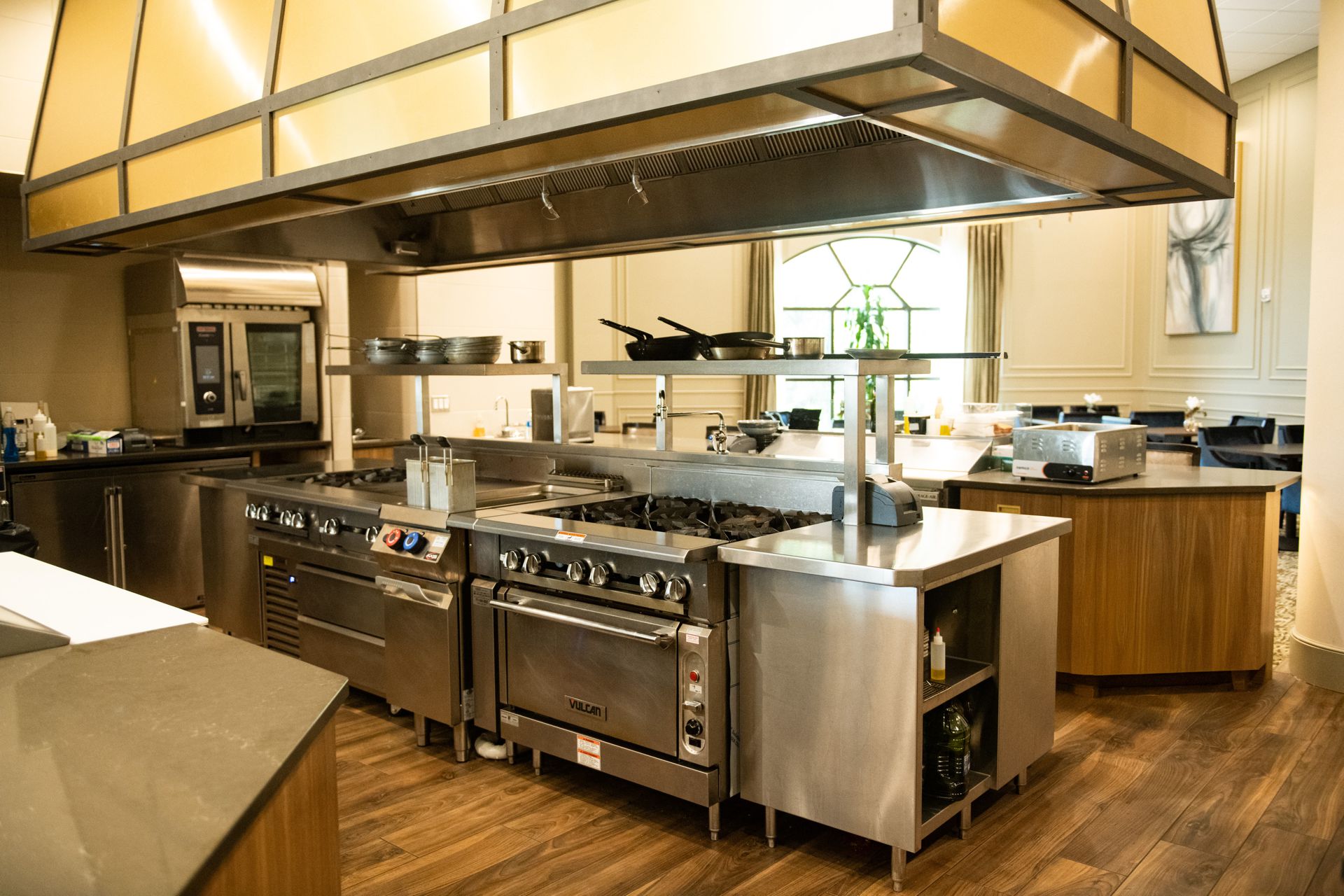
Placement of code-required elements has both operational and aesthetic consequences.
Key Technical Considerations:
- Hand sinks must be within 25 feet of prep, cooking, and dishwashing zones
- Class K extinguishers must be within 30 feet of cooking equipment and are typically larger and wall-mounted with extra signage required
- Mop sinks are required in food prep areas and should be located near actual cleaning zones rather than having equipment needing to be transported, potentially through front-end zones with non-industrial finishes
These elements are often code-required, but how they’re integrated makes all the difference. When these are not thoughtfully considered, they often show up late as:
- Exposed, institutional fixtures in hospitality spaces that diminish visual appeal
- Poorly located elements that interrupt workflow or detract from the overall aesthetic
- Missing power source for upgraded automatic soap dispensers
What this means for LPCs:
Code and technical requirements benefit from early coordination with the design team so they align with the overall experience residents expect. All required distances to fixtures should be verified with the local authority having jurisdiction.
4. Life Plan Community Bar Design Requires Systems Thinking
Bars are often approached as design features, but functionally, they are complex mechanical and operational systems. Team coordination is critical between the architects, interior designers, food service consultants, MEP and structural engineers. Also, bring beverage vendors for beer or soda systems into coordination early and verify routing, not just endpoints.
Coordination Includes:
- Beer systems (kegs + glycol-cooled lines vs. point-of-use kegerators)
- Soda systems (bag-in-box, CO₂ tanks, pump decks)
- Dedicated conduit runs with required bend radii (often incompatible with typical plumbing practices)
- Coordination with vendor-specific installation requirements
A common issue is that routing is designed “as the crow flies,” but actual installation requires vertical and horizontal transitions that exceed allowable bend limits. This leads to rework, often around other ductwork and utilities installed.
In addition, these systems often rely on third-party vendor coordination, meaning final installation requirements may differ from initial design assumptions. Without early validation, even correctly designed systems can be rejected during installation.
What this means for LPCs:
Clarity around the desired level of service and beverage systems to be used will inform both design and infrastructure decisions early. Routing of the beverage lines should be determined early during design for construction coordination.
5. Walk-In Coolers and Freezers Require Structural Coordination
These important components found in every commercial production kitchen introduce structural and operational considerations that are often underestimated.
Key Decisions:
- Recessed vs. floor-mounted:
- Floor-mounted units require ramps (impacting workflow)
- Recessed units require structural coordination (especially with precast systems)
- Refrigeration unit location (roof, remote, or mounted) and service access
- Floor insulation continuity beneath freezers
- Coordination of floor finishes (e.g., diamond plate vs. epoxy or quarry tile)
- Emergency power considerations for refrigeration systems (critical for maintaining food safety during outages)
What this means for LPCs:
These systems may not be part of the daily resident experience, but they directly impact reliability, maintenance, and long-term cost. Review the implications of operational preferences with your design team.
6. Storage and Operations Drive Functionality
Seemingly simple questions, such as where to store glassware, can significantly impact operations. A frequent issue we find in the field is having to adjust shelving because something doesn’t fit.
Without adequate planning:
- Counters become cluttered
- Service efficiency drops
- Visual quality of the space suffers
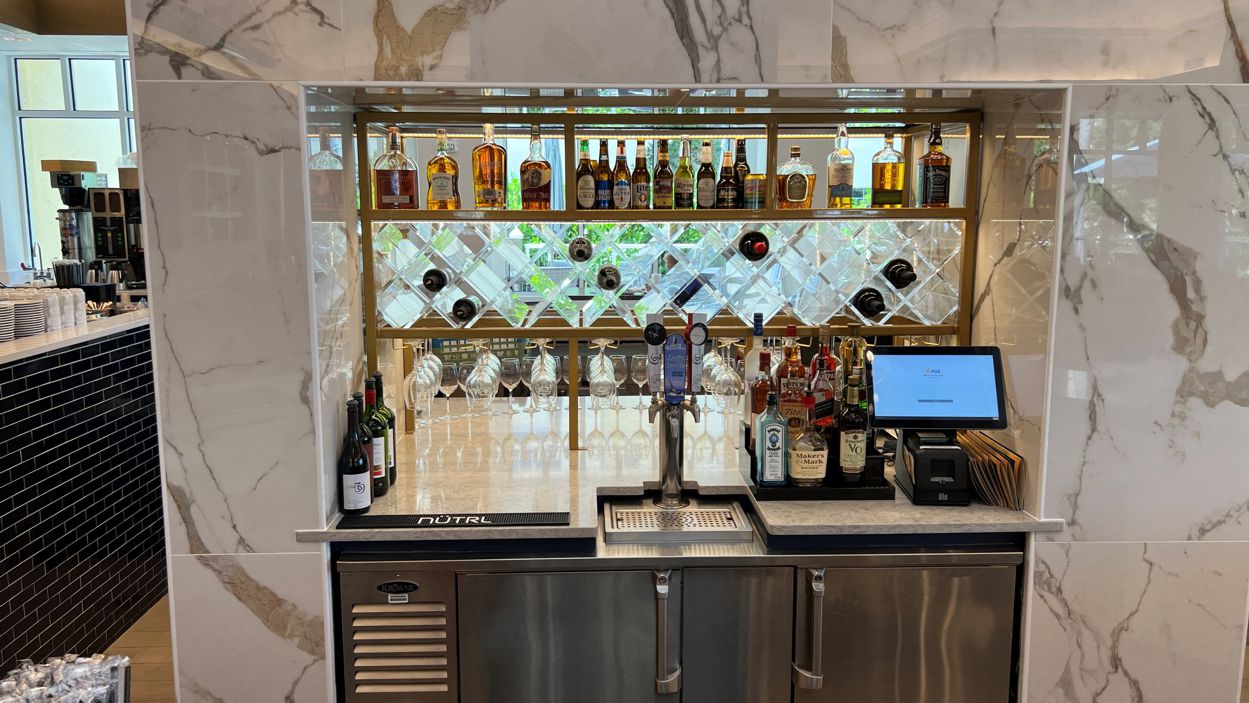
Confirm quantities and types of liquor to be displayed, glassware to be used, and other space needs, such as POS systems.
Bar programs in particular require a detailed understanding of:
- Number and types of glassware
- Liquor display systems (including tiered shelving heights)
- POS and service flow relationships
Some issues we have seen recently are beer taps blocking access to items on shelves, bottles not fitting on shelves or glassware taking up valuable counter space due to lack of built-in storage. These types of issues can be avoided with careful coordination between operations staff and your architect, food service consultant and interior designer.
What this means for LPCs:
Operational planning (storage, workflow, replenishment) is just as critical as spatial design. Make your design team aware of storage needs, including specifics such as glassware to be used, bottle sizes, and other functional particulars so they can be effectively addressed in your design.
7. Design for Change—Life Plan Community Food Service and Dining Venues are Continually Evolving
Food service environments experience high staff turnover, often two to four times higher than other departments. By the time a project opens, the chef and operations staff may be entirely different from those involved in early planning. This can lead to frustration, or even rejection of design decisions that were previously approved.
And often between design and occupancy menus evolve and equipment preferences shift or availability changes. To accommodate these realities, we recommend that design teams:
- Provide utility rough-ins for future equipment
- Include wall blocking for future shelving and accessories
- Document all decisions clearly to manage transitions between teams
Clearly documenting decisions provides the rationale to help future staff understand the intention and vision behind the layout and equipment they must work with each day. Even if their vision for the space is different, they will at least understand why something was done a certain way in the first place.
What this means for LPCs:
Involve frontline staff in initial programming meetings and throughout the design process for ownership of design decisions. Explore opportunities for building in future flexibility and adaptability with your design team. It’s essential to maintaining long-term relevance.
Frequently Asked Questions
What is the most important factor in Life Plan Community food service design?
The menu. It directly determines equipment, infrastructure, and mechanical requirements.
Why do kitchen layouts often create operational issues?
Because they are designed too tightly, without accounting for field tolerances, equipment substitutions, and real-world workflow.
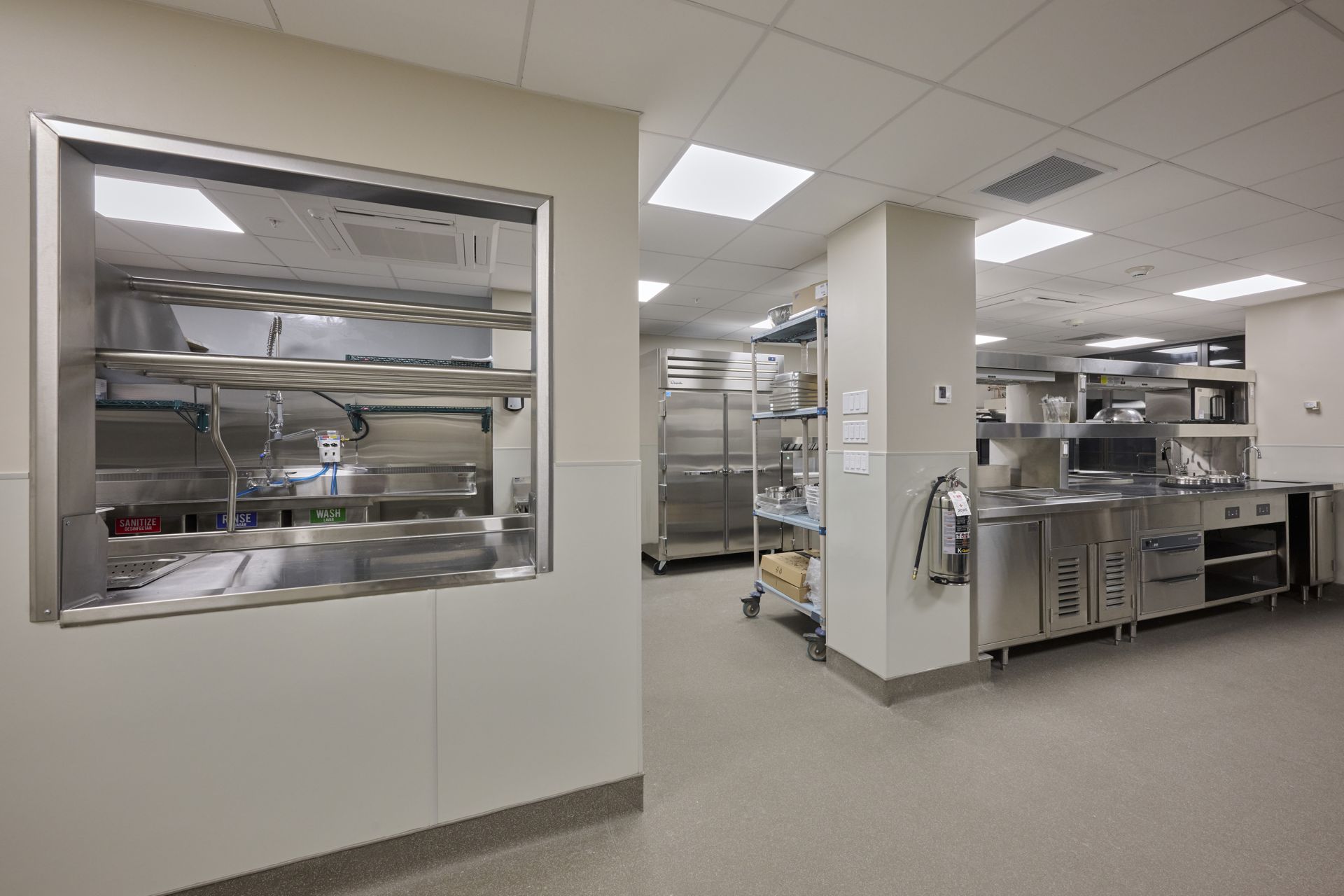
Especially in smaller kitchens, consider ceiling clearance for all hood duct work.
What makes bar design more complex than it appears?
Bar systems require coordination between multiple vendors, specialized routing for beverage lines, and alignment between service model and layout.
What are the top 5 issues we see in the field?
The following issues show up frequently across projects, sometimes late in construction when they’re more difficult to resolve.
- Finalizing the kitchen before finalizing the menu
→ Can lead to costly late-stage changes and compromised solutions - Designing to exact dimensions with no tolerance
→ Small field changes create major operational bottlenecks - Treating code-required elements as afterthoughts
→ Results in visual and functional disconnects in finished spaces - Underestimating bar and beverage system complexity
→ Causes rework, coordination issues, or non-functional systems - Failing to plan for future flexibility
→ Limits the community’s ability to evolve dining offerings over time
About the Authors

Ty is a registered architect with NCARB certification who has more than 15 years of professional experience with commercial projects. Also a member of the American Institute of Architects (AIA), his proficiencies include conceptual design, construction documentation, construction administration, project management and construction management. Ty oversees the RLPS construction administration team and also works closely with the owner, contractors and RLPS design personnel throughout the construction phase. He is a Certified Construction Contract Administrator (CCCA) and a LEED Accredited Professional, certified by the US Green Building Council (USGBC.) Ty’s love of construction began from a young age exploring his grandfather’s...
Learn More About Ty
Jonathan works as a Construction Administrator at RLPS and is actively involved in RLPS’s senior living projects. He travels by plane or car to projects across the country on a weekly basis. He enjoys golfing, traveling, and cooking new and exciting meals.
Learn More About Jonathan
Sean draws on more than 30 years of experience in architectural design, project development, project management, and architectural historic preservation throughout the U.S., Mexico, and the Caribbean. His attention to detail and deep understanding of building design and construction serves our clients well in his role as a construction administrator.
Learn More About Sean
Michael is an experienced construction administrator with a demonstrated history of 30+ years in project management and construction. He coordinates with the owner, contractors and RLPS design personnel throughout the construction phase to help keep projects on track. His path to construction administration began with a bit of advice from his high school drafting teacher who lives by the motto, “Do it right the first time so I won’t have to put it on the punch list.” Originally from Connecticut, Michael has spent the past 12 years in Florida. When he’s not working or spending time with his son or daughter,...
Learn More About Michael
Jeanine brings 30+ years of design and project management experience to inform her role as a construction administrator. She understands the many details and multi-disciplinary coordination that must be considered and maintained for a successful project. Focusing primarily on senior living environments, Jeanine keeps community administrators informed regarding construction progress.
Learn More About Jeanine
James has more than 25 years of experience working through different levels of design documentation, project management and construction administration. He is particularly skilled at coordinating details between multiple disciplines, as well as organizing and managing the complex issues and diverse personalities encountered throughout the project development process. A LEED Accredited Professional, James has also served as a Habitat for Humanity Volunteer. In his free time James enjoys camping, golfing, spending time with my family and watching Philadelphia sports teams.
Learn More About James
Joining RLPS in June of 2024, Ellie has been working as a Construction Administrator. Ellie holds a Bachelor of Science degree in Business Management from Elizabethtown College. Her career focus has always been in the AEC industry. Her previous experience has included project management on a variety of commercial projects, including restaurants, hotels, and a major renovation of the Pennsylvania Forum Auditorium. She is passionate about contributing her resourceful skills and experience toward her new role with RLPS. She lives in Elizabethtown with her husband, Rob, two children—Cora and Sam—and their neurotic Australian Labradoodle, Muzz. When not at work, Ellie...
Learn More About Ellie
Drews specializes in construction administration for both public school and senior living projects. throughout Pennsylvania, with deep experience navigating the state’s multiple prime contractor environment. With a strong understanding of public procurement and the coordination required under Pennsylvania’s multi-prime delivery model, he works closely with owners, contractors, and design teams to keep projects aligned with design intent, schedule, and budget. Known for clear communication and a practical, solutions-oriented approach, Drew helps keep projects moving forward successfully.
Learn More About Drew
Bryan was born in New Jersey, attended college in Lancaster, and now lives in York. Pennsylvania has been his home for almost 25 years, and he appreciates the rich history and deep roots of the area. After receiving his bachelor’s degree, Bryan began working with a small Amish framing company, where he learned about construction. He then taught at a private school in York City that provided excellent education to both marginalized and established families in the struggling metropolis. Bryan later transitioned to a facilities role at the same school, where he had the honor of working with RLPS to...
Learn More About Bryan
Fireplace Design 101: Essential Do’s and Don’ts for Senior Living

Sound Solutions