In the last 25 years, expectations for public and private education outcomes have markedly increased. Waves of reform targeting heightened standards for students, teachers, and administrators coupled with a “no child left behind” edict and test-driven curricula have made academic achievement pressure heavier than ever.
School systems, educators, and designers are deeply influenced by a history of discoveries and trends to improve educational environments to better support academic achievement. While flexibility, open space and student-centered strategies are becoming more mainstream in educational design, many learning environments still have minimal connection to the natural world. They provide little sensory variation or contact with natural light, fresh air, vegetation or outdoor views and generally lack beneficial contact with the outside world. Longstanding building and classroom design considerations and philosophies, however, are beginning to hone in on how to deeply influence cognitive ability, emotional well-being, attention span, focus, and learning outcomes using proven design principles that incorporate the natural world.
Biophilia, an inherent human inclination to seek connections with and to be influenced by natural life, embodies the critical element in human physical and mental health and well-being. Biophilic design principles seek to create built environments that advance and support student wellness and performance.
Learning spaces have the potential to positively impact generations through the employment of biophilic design strategies that promote academic success. Moreover, introducing and incorporating biophilic design principles from the earliest planning stages for built educational environments helps to improve student and teacher experiences, supports higher student achievement, and provides school districts opportunities to interconnect budget resources with positive student outcomes.
What Is Biophilia?
Considered to be a human characteristic based in Homosapien evolutionary development, biophilia is defined in the Webster dictionary as, “The human tendency to interact or be closely associated with other forms of life in nature.” More simply and based in the Greek roots of the word, biophilia is defined as a love (philia) of nature (bio).
The term biophilia was coined by psychologist Erich Fromm in 1964 and came into broader use in the 1980s when American biologist Edward O. Wilson opened a new school of thought focused on the need to bring humans back in contact with nature. “Biophilia,” Wilson said, “is the innately emotional affiliation of human beings to other living organisms.” His studies examined how our tendency to focus on natural life might be based on a biological need that is integral to our development as individuals and as a species.
The concept of biophilia implies that humans hold an intrinsic need for connection with nature on physical, mental, emotional, and social levels, and that this connection affects our personal well-being, productivity and relationships. Modern theories and studies are proving this to be true, providing research-based evidence that spending time in nature and natural environments can have beneficial effects on both physical and mental health. For example, time spent in green spaces is associated with lower levels of stress, improved memory, and heightened creativity; furthermore, symptoms of ADHD and depression can decrease for children and adults as outdoor time increases.
One of the earliest studies connecting nature’s influence and human health comes from a Swedish professor who was researching surgery recovery. In an article in Commercial Architecture, editor Ken Betz writes: Roger Ulrich, Ph.D., EDAC, a professor of architecture at the Center for Healthcare Building Research at Chalmers Univ. of Technology in Sweden didn’t use the term biophilia when he did a study in 1984 that suggested simply that surgery patients recovered better in rooms with a view through a window. But “what few realize is that Ulrich’s famous study was essentially about the impact of biophilic design on the built environment,” said David Navarrete, director, research initiatives at The Sky Factory, Fairfield, IA.
…biophilia implies that humans hold an intrinsic need for connection with nature on physical, mental, emotional, and social levels, and that this connection affects our personal well-being, productivity and relationships.
Subsequently, 14 Patterns of Biophilic Design: Improving Health and Well-Being in the Built Environment expanded on the importance of Ulrich’s classic study, which measured the influence of natural and urban sceneries on patients recovering from gallbladder surgery. “Some patients were provided with views to nature, whereas others looked at brick walls. With all other variables equal, his findings revealed accelerated recovery rates and reduced stress for the patients who had views of nature. On average, patients whose windows overlooked a scene of nature were released after 7.96 days, compared with the 8.71 days [of recovery time] it took for patients whose views were of the hospital’s exterior walls to recover sufficiently to be released—a decrease of 8.5%.”
Unlike accepted biophilic architecture in healthcare and workplaces, only in the last 20 years has the case for embracing biophilia-driven academic environments advanced. Current research and empirical evidence support the measurable, positive impacts of incorporating biophilic concepts in the classroom, strengthening the case for the human-nature connection, and raising its priority level within architectural design strategies.
The specific outcomes of biophilic design in the built education environment are highlighted in greater detail below and illustrate how access to nature and natural elements in schools is more than a nicety or dream: it is vital to students’ and educators’ physical, mental and emotional well-being. Thus, it is a foundation for improved student performance.
What Is Biophilic Design?
The term Biophilic Design describes an architectural strategy that increases occupant connectivity to the natural environment through the use of direct nature, indirect nature, and spatial and positioning conditions to support student well-being.
Research from environmental psychology—the wing of behavioral science studying how natural and man-made spaces affect our health, mental processes, and social interactions—consistently suggests that buildings support us best when they echo the scale and tone of the natural world through pattern, dimension, light, layout, and sound.
The idea is to create students’ access to nature be it direct, indirect, or created to reap positive outcomes. Three key principles serve as the basis of biophilic design:
Nature in the Space: bringing the outdoors in for direct natural experience.
Visual connections with nature, like the incorporation of plants, water effects and animals into the built environment, as well as views to nature from the inside of the building, create a direct natural encounter. For example, incorporating courtyards is one of the earliest efforts to connect nature with built learning environments.
Additional considerations include subtle changes in temperature, humidity, and airflow; dynamic and diffuse light and shadows that mimic lighting conditions in nature; and auditory stimuli such as recordings that evoke the gentle sway of grasses in a breeze or ripples on water.
Natural Analogues: creating implied natural elements or indirect experiences of nature.
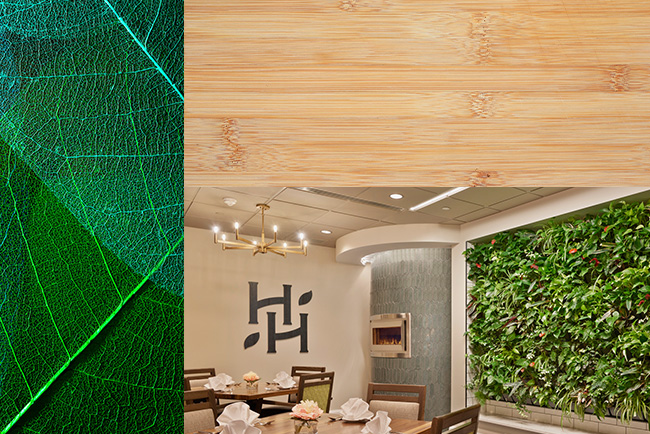
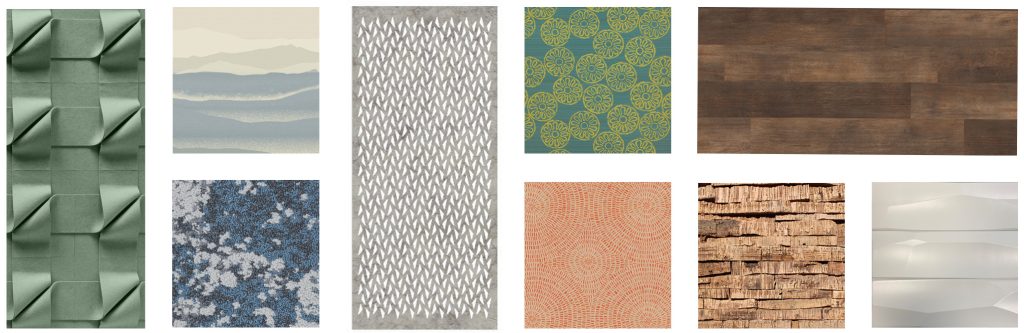
 When outdoor access isn’t feasible or is impractical, natural analogues are materials and patterns that focus on implied elements of nature to evoke response. They are characterized by four broad types: representational artwork, ornamentation, biomorphic forms, and the use of natural building materials.
Specifically, biomorphic forms and patterns are figurative representations within the design of the patterns, shapes, textures or numerical arrangements found in nature. Material connection with nature uses grains, textures and elements in design that distinctly reflect the natural environment to create an overarching sense of the natural world. And, complexity and order is an abstract but visually appealing concept that uses the rich sensory information of the symmetries, hierarchies and geometries found in nature.
Nature of the Space: creating experiences of space and place.
Nature of the Space patterns define how we relate to the building, room or space around us on psychological and physiological levels. True to our historic evolution, humans’ innate preference and positive reactions are to open, savanna-like settings with moderate to high depth ceilings.
Balconies and mezzanine levels provide big picture, unobstructed views. An acoustic pod or a cubicle space provide solace in larger, noisy areas. Surprising installations or unexpected architectural features draw us in and engage us with our environment, creating a strong and undeniably pleasurable human response.
Whatever the categories incorporated in biophilic design for learning spaces, there are countless combinations of patterns, forms, and spaces that can be employed to achieve predictable outcomes and performance metrics. Importantly, biophilic design in the built education environment is most successful when it nurtures a love of space and place.
Biophilic Design Effects and Student Response and Performance
Although the concept of biophilia is relatively straightforward to grasp, the value lies in the cognitive, psychological and physiological foundations and their impacts on learning and the learning environment.
Interaction with natural environments is essential in regulating the autonomic nervous system that integrates the mind and the body. The autonomic nervous system consists of two elements: the sympathetic and the parasympathetic systems. The sympathetic system stimulates the human body’s cognitive functions, and the parasympathetic system is responsible for all the internal functioning that take place when a body is relaxed or at rest.
In chaotic and intense environments, the body’s sympathetic system can be overly engaged and cause feelings of anxiety and initiate “fight or flight” emotional responses to stressors. If the parasympathetic system is concurrently suppressed, the sense of balance is disrupted, resulting in energy drain and mental fatigue. This combination induces stress, frustration, irritability and distraction, ultimately eroding student performance.
Studies show that interacting with natural environments and elements provides elevated parasympathetic activity and reduced sympathetic activity, in turn leading to decreased stress and irritability and improved focus and concentration. Accordingly, decreased stress and improved focus contribute directly to positive learning outcomes.
Student Outcomes: The Green Street Academy Study
Scientific research has indicated that infusing the learning environment with elements of nature has significant productivity, well-being, and overall positive developmental benefits.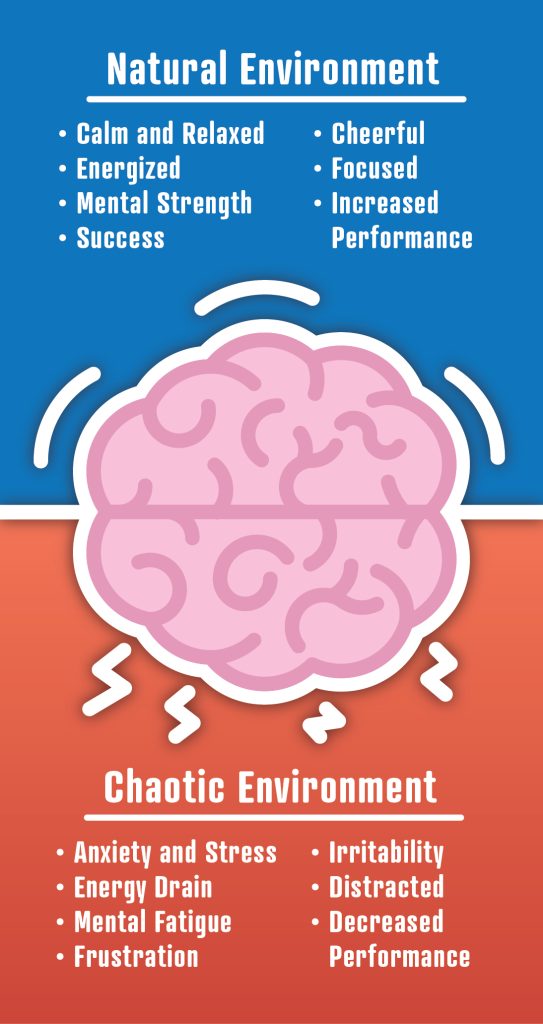
In an intensive 2019 collaborative study, Craig Gaulden Davis Architects, the Salk Institute for Biological Studies at Morgan State University, and Terrapin Bright Green LCC, worked to identify the extent to which biophilic design-enhanced learning spaces contribute to student stress reduction and learning outcomes. This is largely considered to be the first milestone study to test the effectiveness of biophilic design in academic settings as compared to workplace or healthcare environments.
Comparing and contrasting the behaviors and learning success of clients in a traditional classroom versus a biophilic-enriched classroom, a number of approaches were employed in the study:
- Students’ heart rates were monitored as an indication of stress.
- To further assess perceived stress levels, a survey designed to ascertain student stress level perception was developed based on the Perceived Stress Scale for Children.
- Academic performance responses to a biophilic environment were measured through the i-Ready online testing platform for Math and Reading, providing detailed and trend-related information on student performance.
- Qualitative methodology was introduced using an interview approach with both students and teachers, asking them to judge their physical environments and how they impact their behavior, performance, participation, energy levels, and general well-being in the traditional versus biophilic learning spaces.
Learning Outcomes
Control and test classrooms were both 6th grade math classes. Three biophilic design devices were included in the test classroom: views to natural outdoors, biomorphic forms and patterns on surfaces like floors and countertops, and dynamic lighting using window shades that automatically raise and lower based on the sunlight level on windows. Though the demographics between students in control and test classrooms varied, improvement in average math test scores over a 7-month period was more than three times higher in the biophilic classroom when compared to a control classroom. Additionally, after seven months in the biophilic classroom, 7.2% more students tested at grade level than control classroom students.

Surveys and Interviews
Researchers interviewed students and teachers in the biophilic classroom who represented the spectrum of academic performance. The survey included comparative questions regarding their experiences in the traditional classroom versus the biophilic-enhanced classroom. Results indicated students were more positive about learning in the biophilic classroom. Responses reflected that learners were “more relaxed,” “calmer,” “better able to concentrate,” and “easier to focus” in the biophilic room when compared to other classrooms. Stress reduction from the beginning of semester to the end of the semester improved by 32% for students introduced to the biophilic classroom.
Improved student outcomes and student connection to nature are not new ideas in the educational realm and this recent study provides solid evidence. The pedagogical importance of nature can be traced to major educational philosophies expressed by Montessori and Froebel who required students to be taught outside. These educational leaders would be confounded by the idea of rows of students writing notes from lecture backed by one or multiple big-screens.
The 21st century student demands educator-led instruction and innovative support. They need and are receiving instruction reinforced by interactive learning, higher level thinking skills, and student engagement. The biophilic architecture of the built environment, which brings Montessori’s nature-inclusive pedagogy back inside buildings, lends itself well to student learning needs.
Making the Case for Biophilic Design
The classroom is perhaps the most influential environment outside the home for children’s development. Optimizing the learning experience through biophilic design naturally contributes to the attributes that lead to educational success and, consequently, return on investment that can be calculated and realized.
According to the US Census Bureau, the cost of K-12 education as of FY 2024 averaged $17,619 per student per year, and research indicates that the better the attendance and focus, the better the student outcomes and thus the effectiveness of the educational investment.
The evidence surrounding student learning success and school system financial success is both qualitatively and quantitively documented:
- Daylit environments decrease student absenteeism. In a study of New York City Public Schools, adequate daylighting in classrooms and the associated attendance improvements could potentially re-engage $297 million in wasted taxpayer dollars and save $247.5 million in lost parental wages resulting from missed school.
- Improved cognitive development leads to improved test scores (5-18%) and improved formative growth that influence a student’s social and economic outcomes.
- In one study, 20-26% of K-12 students learned faster in spaces that incorporate sunlight and test scores increased 5%-14%. Conversely test scores dropped 17% when learning in classrooms without direct exposure to sunlight.
Simply put, the benefits of biophilic design improves the results from a school’s investment and the financial success of the whole community.
Conclusion
By comparison to studies in healthcare and workplace environments, the science, understanding and benefits of biophilic design are technically still emergent in academic settings. Nonetheless, it is becoming increasingly well-illustrated that biophilic design principles and outcomes create tangible, measurable benefits in educational environments. From cognitive to socio-emotional and learning outcomes, biophilic design has the potential to fundamentally change the way students interact with the built environment, the benefits of which cannot be discounted.
…it is becoming increasingly well-illustrated that biophilic design principles and outcomes create tangible, measurable benefits in educational environments.
For educators who teach in increasingly diverse contexts, “it is not only socially virtuous but also pedagogically valuable to proactively anticipate and incorporate students’ heterogeneous backgrounds, abilities, and interests into teaching and course design…imbuing all students with a sense of belonging in the classroom and curriculum”. Likewise, as we become architecturally more attuned to the benefits of biophilia, educational architecture can anticipate characteristics and educational needs of the 21st century student populace by placing biophilia in the design process rather than in a reactive position. Proactive biophilic design can ultimately generate positive learning and teaching outcomes that lead to financial benefits for students, schools, school systems, and communities.
Forward-looking considerations
When the demand is for better education, the opportunity to implement the advantages of biophilic architecture is supported both practically and economically. The mandate for innovation plays against a background of economic inefficiency in American schools that has resulted in more than 50% of school buildings being over 50 years old leading to unsafe conditions, not just related to air quality or cleanliness important to keeping our students and school staff healthy, but also the physical infrastructure.
When students cannot be outside, nature needs to be brought inside via biophilic architecture. The classrooms of the last century have already been displaced by change: chalkboards became whiteboards, and then they became computer screens. Moreover, as students are exposed to STEM and more sophisticated knowledge emerges about nature, the more comfortable they will be in classrooms created with biophilic principles. Biophilic architecture will become an assumption about the natural way to create educational spaces.
Translating the data discussed in this article into a physical layout requires intentional material selections. For more details on choosing biophilic materials for classrooms, read our post on selecting interior finishes.
Interior Designer Jacqueline Fox, IIDA, NCIDQ, contributed to this article. Jacqueline has more than 10 years experience creating unique spaces for the education and senior living markets. She focuses on creating functional, future-ready learning environments that incorporate biophilic principles and materials, improve SEL (social and emotional learning) of students, as well as accommodate and enhance a variety of learning styles.
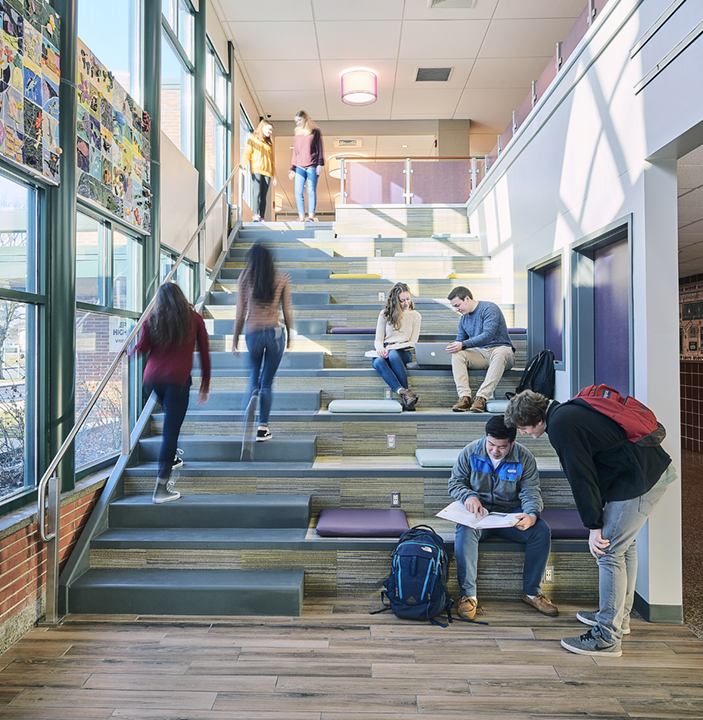
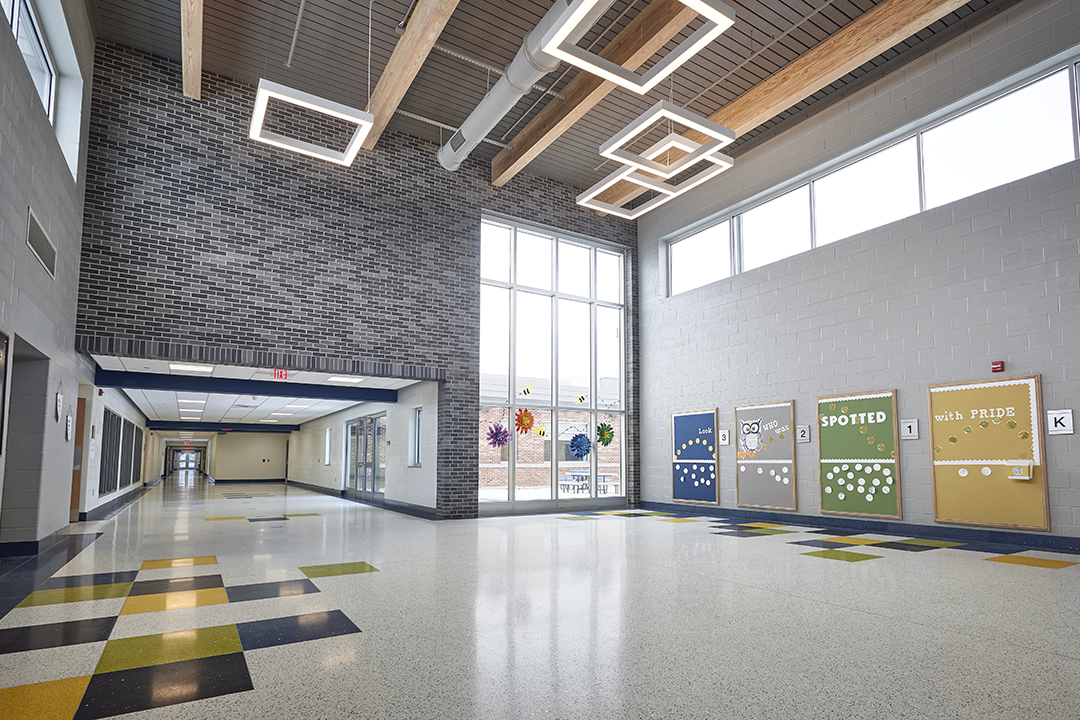
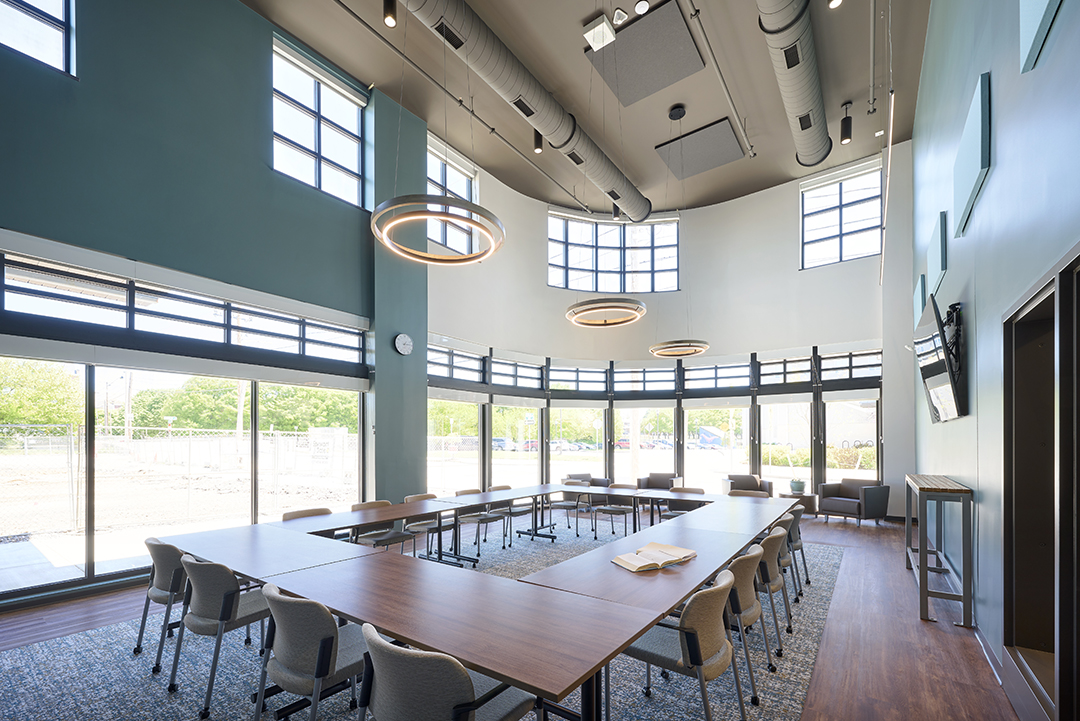
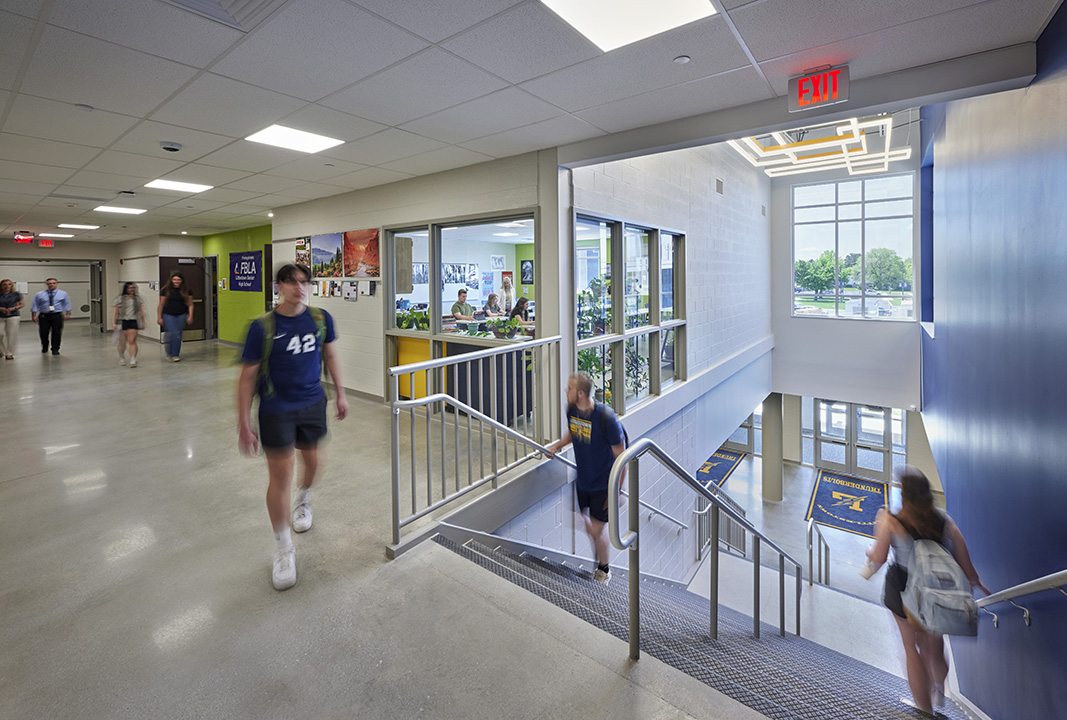
Biophilic Design in Schools Today
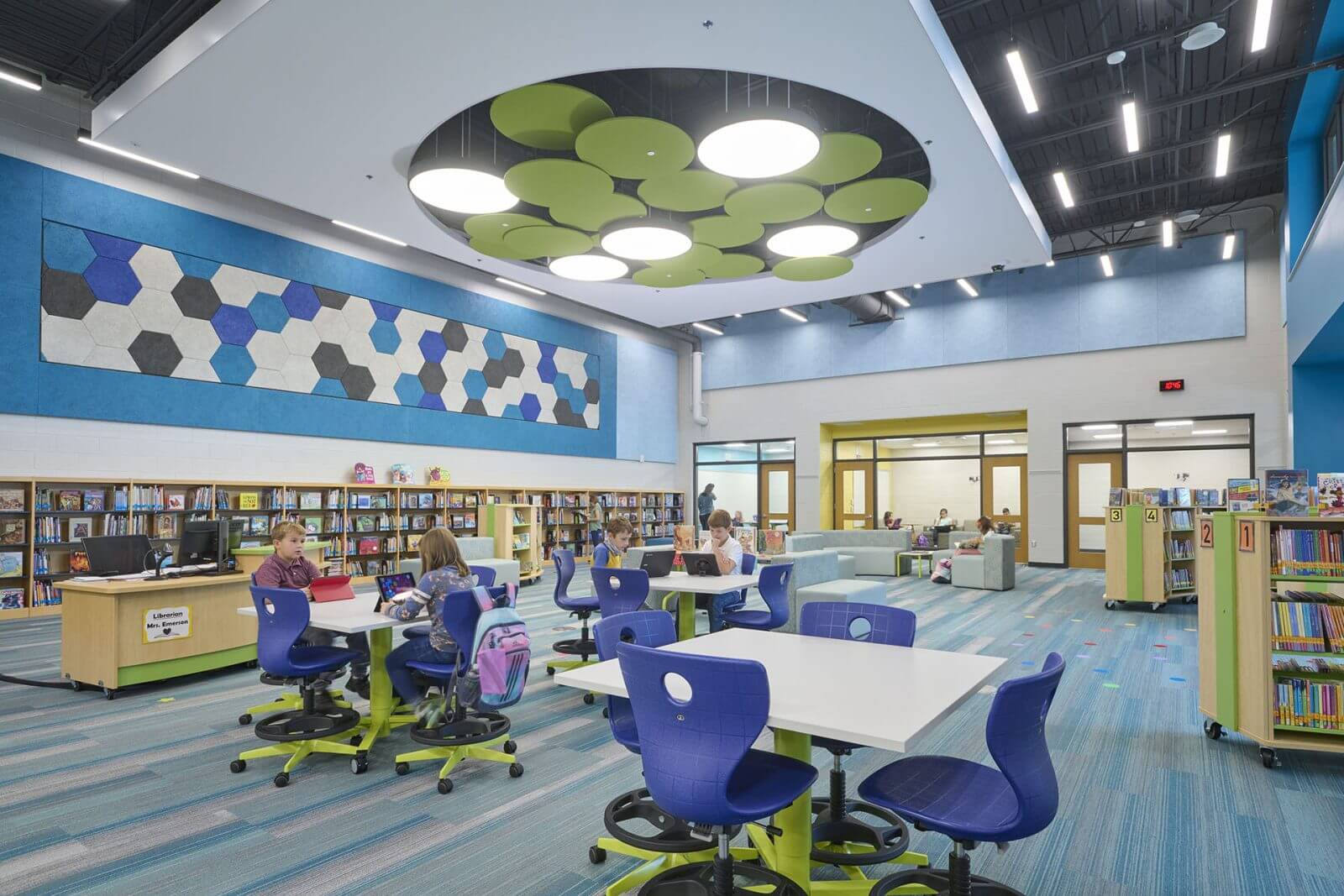
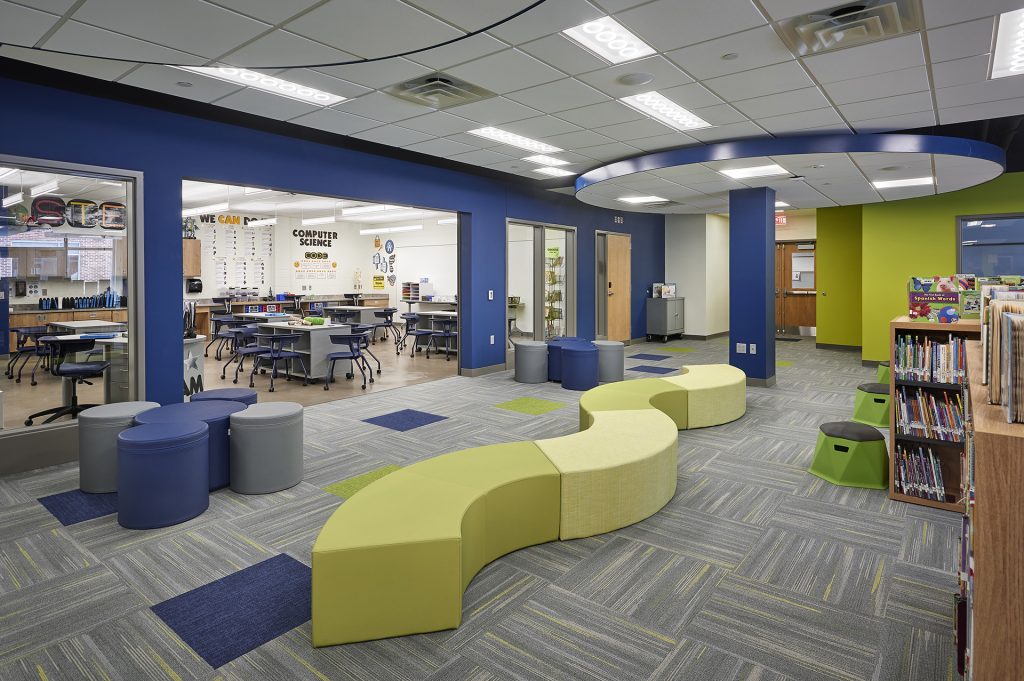
Access to sunlight and views to the outside elevates student performance in a variety of educational spaces