
North Carolina Life Plan Community Provider Panel Shares Successful Strategies for Growth
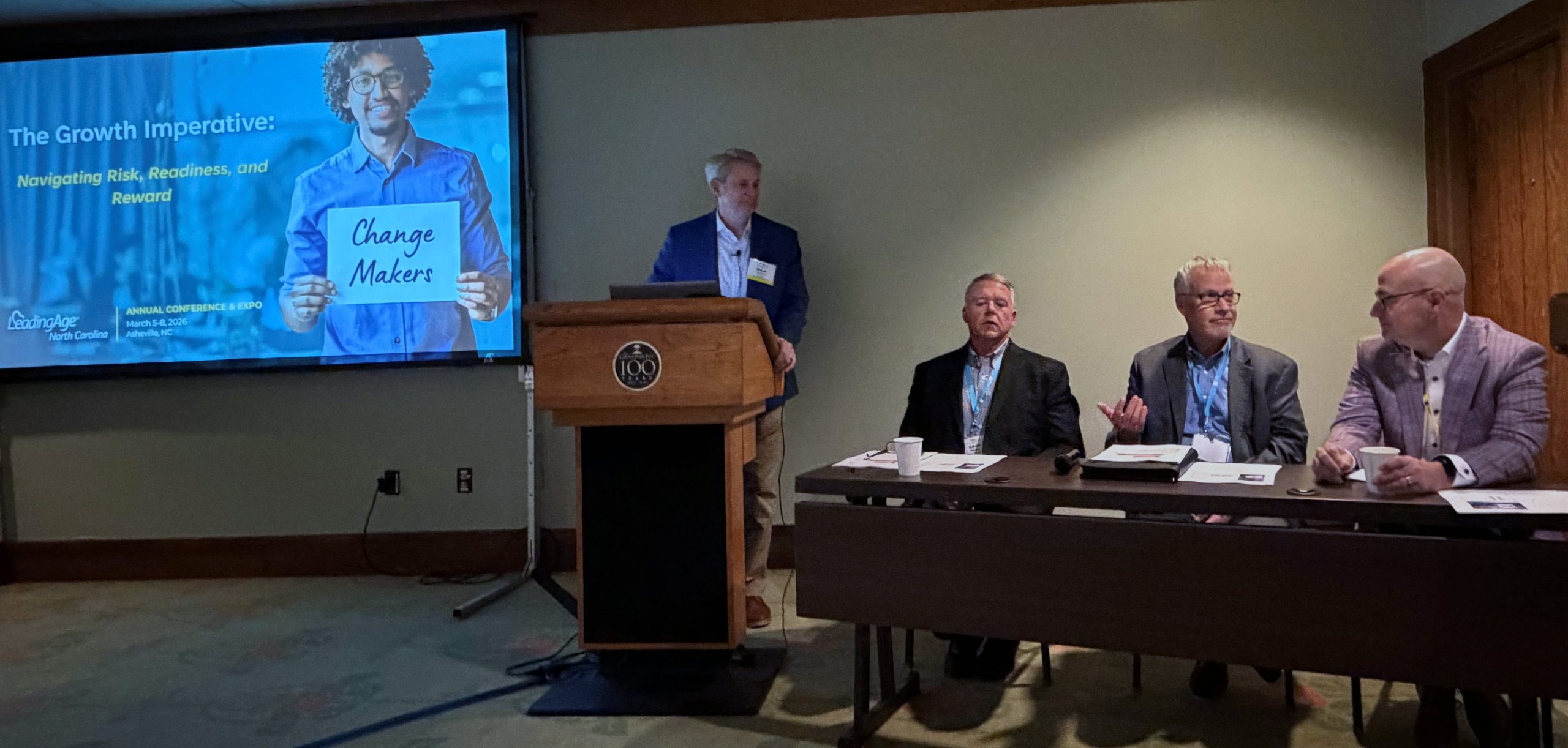
As demand for senior living accelerates, many Life Plan Communities are evaluating how (and whether) to grow. This resource highlights key themes discussed during the LeadingAge North Carolina educational session, exploring the risks, pressures, and strategic considerations shaping expansion decisions today. While every organization’s path is different, the goal is the same: aligning growth opportunities with mission, market realities, operational readiness, and long-term sustainability.
According to a recent NIC report, independent living occupancy has surpassed 90% nationally while inventory growth hit a record low in Q3 2025. With accelerating demand over the next decade, Life Plan Communities face a critical question: If the market is ready, why aren’t we?
Our CEO panelists from Carolina Village, Southminster and ThriveMore explored the growing gap between opportunity and action. While organizations often cite staff shortages, rising development costs, regulatory uncertainty, and financial strain as barriers, many are successfully navigating these challenges, and, in doing so, redefining what sustainable growth looks like.
Key Considerations for Senior Living Growth
1. The Current Landscape in North Carolina:
- According to the NCDHHS Division of Aging and Adult Services, one in five North Carolina residents was older than 65 by 2025
- Senior households are increasing across nearly all counties
- North Carolina ranks 9th in the U.S. for total population aged 65
2. What’s Preventing Expansion?
- Workforce shortages: Panelists shared how they are working with local high schools and community colleges for current and future workforce development, as well as a dining dollars program with local restaurants that expand choice for residents while helping to alleviate pressure on in-house venues.
- Rising costs: Everything from construction, borrowing costs, wages, utility, and food costs are increasing, while providers strive to keep yearly increase reasonable for residents. As one panelists shared, the former average 3% increase is no longer viable.
- Regulatory complexity: Staff turnover has also impacted the state health department which as resulted in more “nitpicks” for communities as new staff are being trained. There are also more disclosure requirements and increased scrutiny when looking to expand or grow.
- Increasing resident acuity: Residents are are living longer, but also having more medical challenges. The panelists are also seeing a trend of people waiting too long to the extent that some are no longer eligible for independent living. As the length of time in IL has increased, there is some concern about the long-term impact of that reduced turnover which is unknown at this time.
- Existing Infrastructure issues: Delayed capital improvements create added burden on new projects.
- Resistance to change: Often, the longer it’s been since an update or expansion, the harder it becomes to persuade boards to move forward. While resident fatigue with constant change is real, it is also important for them to see regular updates and the positive impacts of prudent growth strategies.
3. Risks of Standing Still
“Too much thinking leads to paralysis by analysis” – Robert Herjavec
Avoiding expansion despite a long waitlist and/or market demand can be detrimental in the long term. Providers must avoid overreacting to inevitable uncertainties or risk facing any of all of the following:
- Loss of market share
- Losing competitive positioning
- Mission / market misalignment
- Potential for financial decline
4. Expansion Readiness Framework
The panelists shared how successful expansions require more than identifying demand. Communities must evaluate whether operational capacity, financial feasibility, and long-term mission support growth objectives. The following framework highlights key areas providers should assess before moving forward with expansion initiatives.
- Market Demand & Demographic
- Current Operational Performance
- Financial Feasibility & Debt Capacity
- Housing Mix / Rightsizing Strategy
- Organizational Strategy & Mission Alignment
Real Estate, Land, and Zoning Considerations
- Site suitability: Expand on existing land? Acquire adjacent parcels? Redevelop outdated wings?
- Zoning & land‑use approvals: Height restrictions, density limitations, parking requirements, environmental reviews.
- Infrastructure capacity: Water, sewer, electrical, broadband, transportation access.
- Neighborhood sentiment: Community acceptance vs. resistance, which can affect entitlement timelines.
Workforce & Talent Pipeline
- Labor market depth: CNAs, LPNs/RNs, dining staff, housekeeping, activities.
- Compensation competitiveness: Wage pressure from hospitals, travel‑nurse agencies, and retail sectors.
- Partnerships: Local community colleges, nurse training programs, international recruiting channels.
- Transportation access: Essential in markets where staff depend on public transit.
Timeline, Phasing, and Disruption Planning for Expansion on Existing Campus
- Minimizing disruption to dining, parking, wellness, and common areas.
- Temporary relocation planning for residents living adjacent to construction zones.
- Construction timeline realism given labor and supply‑chain volatility.
5. Building Stakeholder Buy-In
Even the strongest expansion strategy can struggle without stakeholder confidence and alignment. Successful organizations are engaging boards, residents, staff, and community partners early in the process to build understanding, reduce uncertainty, and create momentum around a shared vision for the future.
Align Messaging with Organizational Mission
- Meeting future senior housing demand
- Supporting aging in place
- Expanding healthcare services
- Increasing accessibility for seniors
Use Data to Shift Discussion from Perceived Risk to Informed Growth Strategy
- Waitlists and occupancy data
- Demographic projections
- Local supply gaps
- Financial modeling and feasibility studies
Engage Stakeholders Early
- Boards of directors, staff members, current residents, wait list members, municipal leaders, community members, regulatory agencies
- Community engagement meetings, focus groups, updates
- Transparency in development plans
- Impact studies
Communicate Positive Outcomes of Expansion
- Increased housing access
- Reduced waitlists
- Enhanced healthcare services
- Improved amenities and quality of life
- Job creation and economic growth
- Modernized campuses
- Stronger ability to age in place
- Stronger financials
Demand for senior living is not slowing. The organizations best positioned for long-term success are those developing thoughtful, mission-aligned strategies for growth amid uncertainty. Expansion today requires balancing financial realities, workforce capacity, operational readiness, resident expectations, and long-term organizational vision.
Communities willing to evaluate growth proactively, rather than reactively, will be better positioned to serve the next generation of older adults.
Interested in continuing the conversation?
Use our Contact Form to reach out for more information regarding emerging trends, campus planning strategies, or growth considerations for your organization.
Thank You to Our CEO Panel!
Kevin Parries, Carolina Village; Ben Gilchrist, Southminster and Reed VanderSlik, ThriveMore