Skilled nursing rightsizing has become a strategic imperative for many Life Plan Communities. These nonprofit organizations face the very real conundrum of upholding longstanding missions to provide lifelong care, regardless of residents’ means or abilities, while responding to escalating financial pressures on skilled nursing operations.
The financial realities are significant. In 2023, the American Health Care Association and National Center for Assisted Living (AHCA/NCAL) reported that 55% of nursing homes were operating at a loss and 52% of providers indicated they might not be able to continue operating for more than a year at the current pace.
Complex Care Adding to Pressures
As Life Plan Communities implement strategies to help residents stay healthier for longer periods and access to in-home care increases, community sponsors report that skilled nursing care is becoming a much shorter term, but more costly “very end of life” stay for most. Even if committed to maintaining the full care continuum, Life Plan Communities must rightsize their offerings to close the gap between operational costs and insufficient reimbursements.
As we move away from large brick-and-morter settings, with residential skilled nursing reserved for the most complex cases, providers must manage risk,” shares Kevin Schwab, CEO of Givens Communities in Asheville, NC. “A smaller skilled nursing facility will likely be more costly to operate and this will be compounded if a large number of residents stay there long enough to exhaust their resources.”
Skilled Nursing Rightsizing Strategies
Life Plan Community sponsors are implementing a myriad of programming and design strategies, exploring every opportunity to manage costs:
- Economies of Scale
- At-Home Services
- Shared Rooms to Private
- Specialized Care Households
- Assisted Living / Personal Care
- Independent or Concierge Living
- Creative Partnerships
1. Economies of Scale
Nonprofit organizations currently account for 20% of skilled nursing beds in the United States, according to AHCA/NCAL. Many of the for-profit providers representing the bulk of the remaining beds are large entities that can leverage economies of scale. Some multi-site nonprofit organizations have considered a similar approach to centralizing skilled nursing care for multiple campuses into one.
In the face of mounting staffing pressures, continued reimbursement shortfalls and an obsolete building, SpiriTrust Lutheran (now part of Concordia Lutheran Ministries) made the difficult decision to eliminate skilled nursing care at one of its campuses. According to then-CEO Robert Rundle, it was important to share the “why” for the closure with stakeholders. This transparency helped to ease the transition for its residents who can access skilled nursing care at a nearby “sister” campus, with transportation between the two provided by SpiriTrust.
We are competing with local hospitals for both licensed and unlicensed staff,” Rundle shared. “It’s hard to compete with the huge signing bonuses they can provide. On top of that, regulators believe we are in a crisis of quality of care, but in actuality we are in a crisis of sustainability of care. If this is not resolved, access to care is going to become an issue.”
Another option is partnering with an outside, larger-scale skilled nursing organization to provide higher level care when needed. This allows the Life Plan Community to downsize or eliminate skilled nursing altogether. However, this approach must be carefully considered and communicated. It can be negatively perceived by a spouse or friends who now must travel off-campus to visit their loved one. This approach also requires reliance on a third party to provide the desired high quality care.
2. Providing At-Home Care Services
Many communities are looking to home care options as part of their skilled nursing rightsizing strategy. It has been no secret that the majority of people prefer to stay in their homes as they age—whether a private residence or a Life Plan Community apartment. However, financial models must weigh the potential cost savings for downsized skilled nursing against the bottom line impacts of reduced turnover for independent living units when providing at-home services.
Phoebe Ministries, a multi-site sponsor based in Allentown, Pennsylvania, operates the Comforting Home Care by Phoebe program. This program is supported by its own large pharmacy operations that serves other providers as well. The at-home program has been well received, but CEO Scott Stevenson cautions against viewing this as a “cure-all” for the challenges skilled nursing providers are facing.
At-home services are one prong of the solution, but only for people who need three or less hours of care a day,” Stevenson says. “Many residents living in skilled nursing need 20 plus hours of care a day. Home care cannot provide the level of support needed by these residents, who are typically very frail and often have complex medical conditions.”
While at-home services are currently being touted as a lower-cost alternative delivery method, this sector is also experiencing staffing challenges and rising costs. The cost of at-home care is projected to increase over the coming decades.
The U.S. Bureau of Labor Statistics’ (BLS) Consumer Price Index shows that between May 2025 and May 2026, home care prices increased by 7.9 percent. This is almost double the rate of overall inflation (4.2 percent), and significantly higher than major categories such as food and housing. For those who do need 24-hour care, a skilled nursing residence may be the most cost-effective option while also able to mitigate isolation concerns for older adults confined to their homes.
Providing At Home Care in a Life Plan Community
As providers consider delivering home care services within an independent living, assisted living or personal care setting, there are some associated design considerations. When an organization is faced with many people aging in place at a high acuity level, they may be at risk if the structure was not constructed to the ‘I-institutional’ construction standard that accounts for a largely non-ambulatory population.
Homestead Village made the bold decision to pursue dual licensing for its independent living apartments. This allows the community to provide personal care in individual residences rather than having to expand its healthcare center.
Senior living leaders need to strategically focus on what customers want and not allow the dysfunctional regulatory environment to interfere,” says Doug Motter, CEO. “We are successful when we find ways to provide exceptional services that are unfettered by regulatory hindrances.”
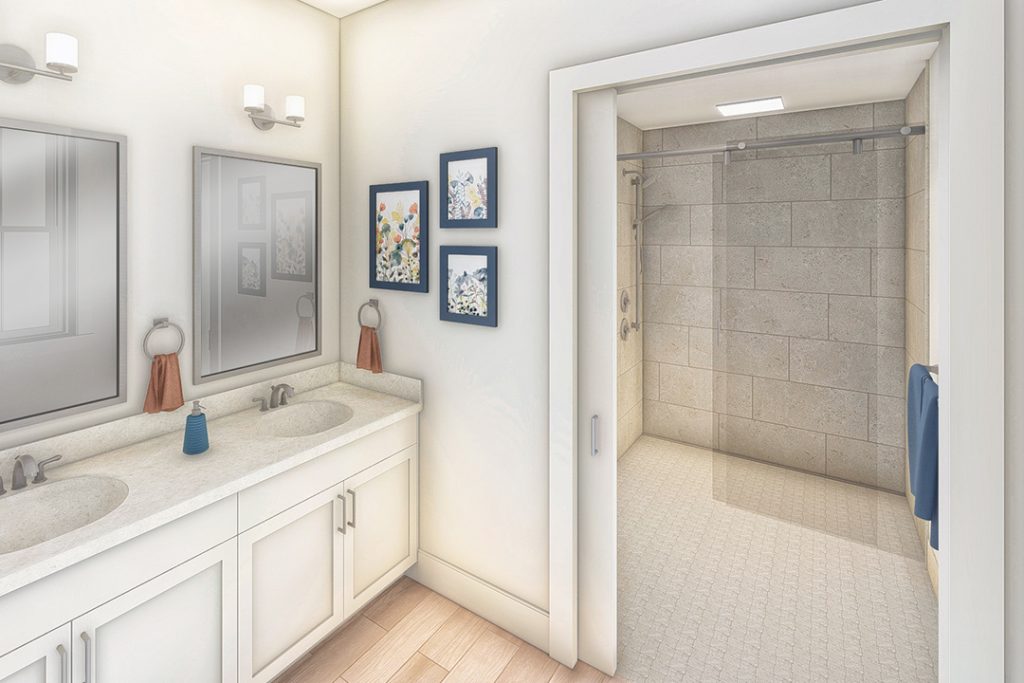
While this approach is welcomed by residents who want to stay in their homes as long as possible, Motter acknowledges that these in-home services do not currently qualify for Medicaid or Medicare reimbursements so careful budgetary planning is needed. He also shared that the move to dual licensing generated a bit of culture shock with some residents who did not want to see walkers and wheelchairs at the front door. However, most ultimately agreed that it was better than having those needing care being “whisked away” to a heavily regulated and thereby more institutional setting.
Our entire community is built around our ‘Thrive Where You Are‘ philosophy,” Motter says. “This cultural shift has become a differentiator for us.”
3. Converting Shared Rooms to Private
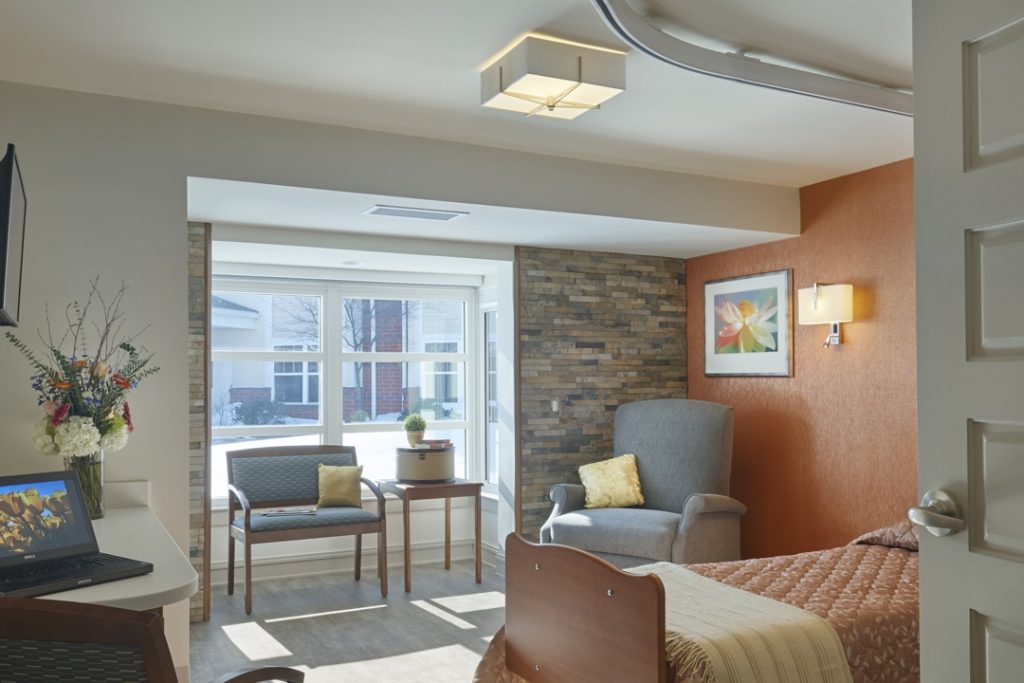
For many communities, healthcare downsizing has been accomplished by simply converting resident rooms that had been double occupancy to single occupancy. This provides the added benefit of a more private living arrangement preferred by most consumers, as well as enhanced infection-control as reported in The Gerontologist.
Smith Senior Living in Chicago, Illinois renovated its skilled nursing care residence to have more private suites. Licensed skilled nursing beds went from 100, mostly double-occupancy, to 78, with the majority now being private suites.
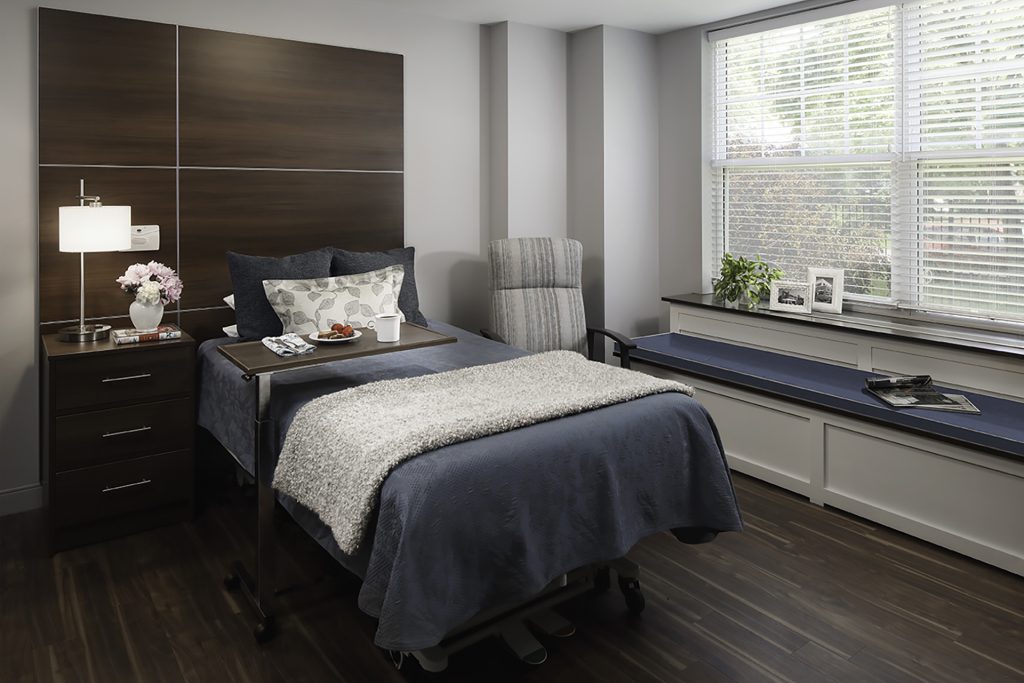
The days of semi-private rooms or more than two in a room are well over,” Kevin McGee, President and CEO, told Skilled Nursing News in an interview. “I wish I had something creative to say, but you’ve got to figure out a path to private rooms, otherwise, you’re not part of the game anymore.”
While there’s no question that private rooms are preferred, it’s important to note the potential repercussions with simply reducing census in an existing framework. Concurrent with the long term care census reduction, Smith Senior Living added short-term rehabilitation services which serve as a lead generator for both independent and assisted living.
Communities without this type of offset strategy must consider the following possibilities:
- Staffing challenges can be compounded if personnel ratios were optimized for double occupancy and now a given household or neighborhood has half that number of residents.
- The organization may become top-heavy at the administrator level so that the overall cost per bed increases and may necessitate a corresponding increase in the private pay rate
- The potential for using existing infrastructure for other revenue-generating programming is eliminated.
4. Reinventing as Specialized Care Households
A number of Life Plan Communities have decommissioned entire skilled nursing neighborhoods. These unoccupied areas are often well suited for conversion. A building infrastructure analysis must confirm viability, but this can be a cost-effective strategy to introduce a specialized service line.
Memory Care
Edenwald in Towson, Maryland took the opportunity to transform a decommissioned nursing neighborhood into a memory care household with specialized programming. Renovations opened up the core of the plan to provide inviting and varied common areas that support Edenwald’s whole-person approach to memory care that addresses the physical, emotional, psychosocial and spiritual needs of residents and their families. The open dining and living room spaces are complemented by a library/resource center, game room, fitness area, music therapy room and arts and crafts studio.
Short-Term Rehab Care
Another possible use for former skilled nursing stock is dedicated short-term rehab care. While Medicare reimbursement for rehab care has significantly diminished from what it was a few years ago, some communities are still finding success with this specialized service. Others that had hoped it could serve as a lead generator for independent living have been disappointed.
Competition has increased for short-term Medicare rehab stays. For example, several hospital systems in Pennsylvania are getting into the rehab and long-term acute care sector. These groups tend to focus on keeping the private pay patients who qualify for Medicare in their system rather than sending them to Life Plan Communities.
While most communities still accept some direct admits to keep these areas full for operating efficiencies, the trend has been to focus on “internal” residents.
In-Patient End-of-Life Care
With admissions down following the COVID-19 pandemic, Masonic Village at Elizabethtown converted a 51-bed skilled care neighborhood into a dedicated end-of-life setting. The renovated household offers this specialized care for 16 residents and incorporates thoughtful accommodations for their loved ones.
The conversion did not require a licensing change and minimal renovations were needed to support the new programming objectives. According to Matthew Mayo, Assistant Executive Director / Health Care Administrator, Masonic Village did not pursue licensing as a dedicated hospice unit due to the specific Medicare regulations.
You must figure out a way to maximize every Medicaid dollar,” says Mayo. “Eliminate waste and inefficiencies. Medicaid reimbursement does not cover the cost of good quality care.”
Double occupancy rooms were converted to spacious private rooms with amenities for visiting family members, such as a pull-out couch and a refrigerator. The remaining resident rooms were converted to shared uses such as a meditation chapel, a children’s space, a resource library and a “touchdown” office space for working remotely.
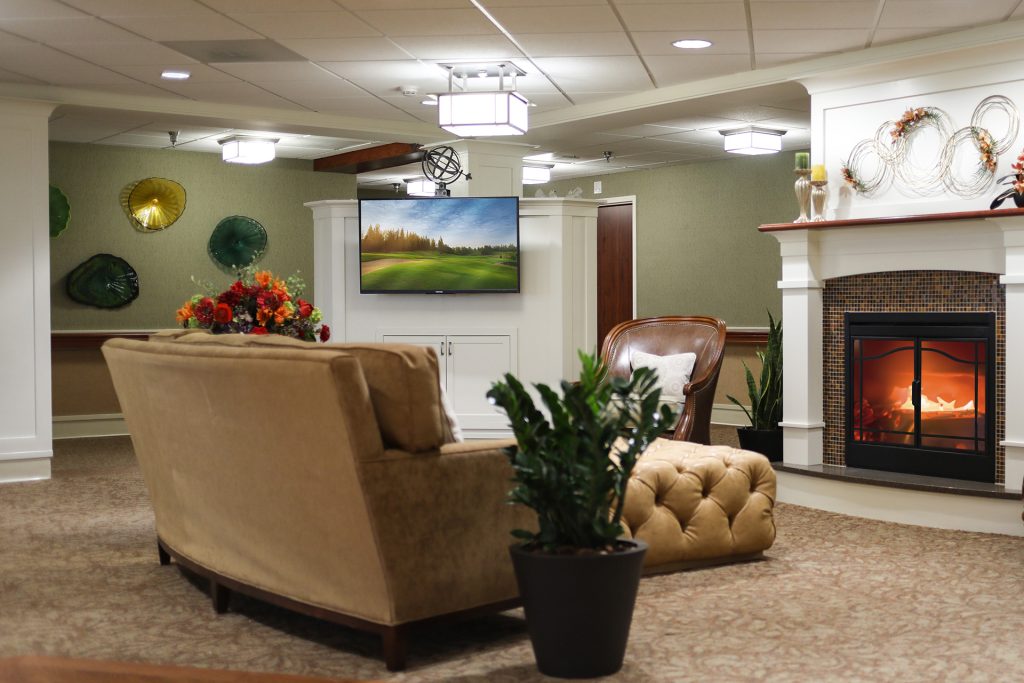
This comfortable, homelike setting is open to campus residents as well as members of the greater community needing 24-hour comfort care.
Mayo’s advice to other communities:
Find a need or service gap in your area (such as bariatric or heart condition care) and fill it.”
But he also cautions that these special needs units must be considered through the lens of operating requirements so as not to place undue pressure on staff members.
5. Conversion to Assisted Living
Life Plan Communities in some areas of the country are opting to eliminate skilled nursing altogether in favor of assisted living. This is increasingly being considered in states that have more options with assisted living. Conversely, in some states like Pennsylvania there is no funding mechanism for assisted living.
Rose Villa in Portland, Oregon provides skilled nursing care (as a licensed Intermediate Care Facility (ICF)) on the first floor and a Residential Care Facility (RCF), similar to assisted living, on the second floor of its health center. The entire building was built to the most stringent standards for flexibility to flip from one license to the other.
Even though this cost more, I would never do it any other way,” says Vassar Byrd who served as CEO of Rose Villa from 2006 through 2023. “This flexibility freed our team from having to guess what the future will bring.”
The community already has plans to re-evaluate and may covert to all assisted living at some point.
Staffing challenges were a big part of this,” Byrd shared. “Per person reimbursement for Medicaid in Oregon is close to private pay – so the issue is cost of care staff, not reimbursement. Rose Villa will ‘skill up’ as needed to deal with higher acuity cases within assisted living.”
6. Conversion to Independent or Concierge Living
A decommissioned skilled nursing neighborhood can create opportunities for new residential options, including middle-market independent living or a concierge living model. For Life Plan Communities, these conversions can address changing consumer preferences, expand housing choices and extend the organization’s mission to a broader range of older adults.
The need for more attainable senior housing options is significant, but construction costs make development of new middle-market housing difficult to achieve. Unlike subsidized low-income housing, middle-market projects typically do not qualify for tax credits or other funding mechanisms that can help offset development costs. Repurposing existing infrastructure can reduce the extent of new construction required and potentially yield savings that support a more attainable price point.
Concierge living offers another potential reuse strategy. Sometimes referred to as enhanced living, residential care or personal care, the model takes a different form for each Life Plan Community and may be influenced by state licensing requirements. Regardless of the terminology, the underlying concept is similar: residents live as independently as possible while accessing support services on an as-needed basis. Services might range from housekeeping and laundry to transportation, care coordination or other assistance that helps residents remain independent.
7. Creative Partnerships
Former skilled nursing areas can also be adapted for intergenerational opportunities. Pleasant View Communities in Manheim, Pennsylvania has partnered with a non-profit organization, OneLife Institute, to breathe new life into a decommissioned skilled nursing floor.
This faith-based program allows high school graduates to serve others while earning college credits. Adaptive re-use of a former skilled nursing wing works well for their residential program needs and the ground floor location allows them to have their own entrance. The Pleasant View campus location provides built-in opportunities for learning and service while fostering multi-generational interactions and campus vitality.
We have 28 ‘gap-year’ students who are each partnered with a resident and staff member,” Jonathan Hollinger, CEO reports. “These students enter the adult world with a very different reference point from the program. One former student is now pursuing his NHA license.”
This type of partnership can also work at a smaller scale, with college students moving into individual rooms. One such example is Vincentian Shenley Gardens in Pittsburgh, Pennsylvania. In July 2023, there were 51 residents and six graduate students living there. Students receive below-market monthly rent ($600-$1,400) in exchange for service hours to residents through educational workshops, social outings, parties, technology help and other assistance.
Meeting Mission with Future-Ready Design
As many Life Plan Communities are focused on downsizing or eliminating their skilled care residences, there are a few providers who have reaffirmed their commitment to the full continuum of senior care. One such community is Bishop Gadsden, located in Charleston, South Carolina. The hospitality-focused Gadsden Glen Center for Health and Rehab, completed in 2022, includes 64 skilled nursing beds spread across four neighborhoods. Gadsden Glen also includes residences for 32 people living with dementia and 32 short-term rehabilitation rooms.
The building block for long term care was the resident room. The spacious, 409 square foot rooms feature a separate anteroom offset from the sleeping area, as well as private bathrooms with full showers. Tucking the bed around the corner enhances privacy for residents and directs views to the large windows and daylight streaming in.
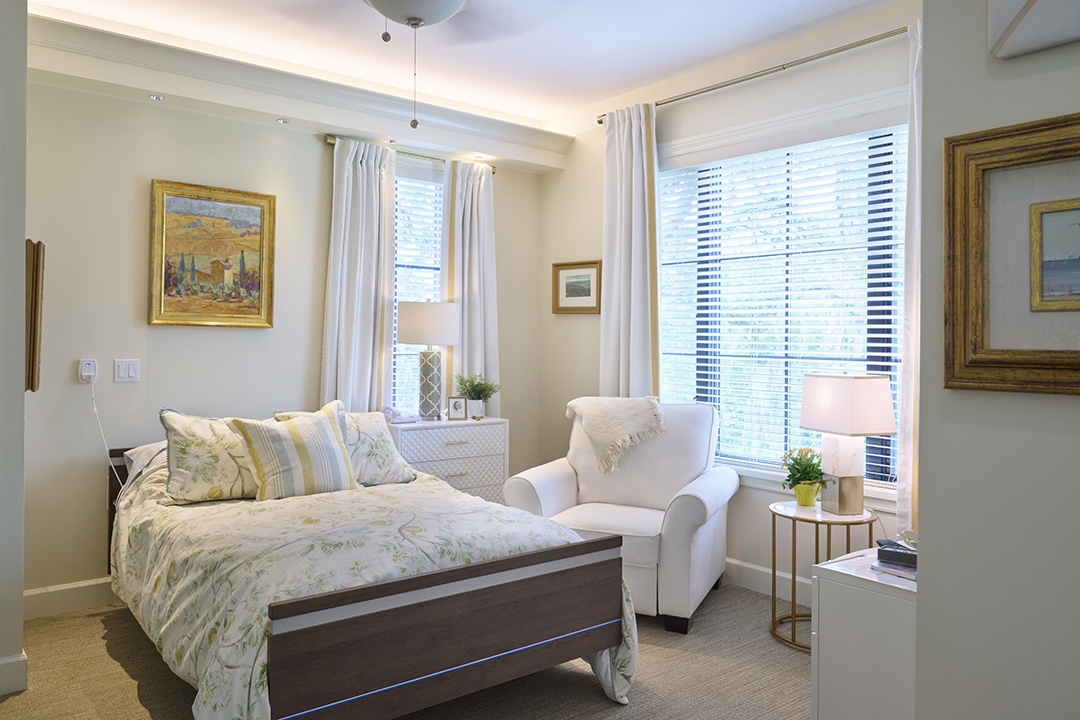
Our team members were very involved in the design of the rooms,” shares CEO Sarah Tipton. “We had mock-ups of resident rooms and bathrooms created so staff members could help fine-tune details like toilet locations, lift access and bed size.”
However, beyond these current benefits, the unique layout provides future adaptability. The rooms can be easily modified for assisted living with the addition of a kitchenette or combined to create independent living apartments.
Greater Good: Aligning Mission & Market for Life Plan Communities
It is impossible to know how current and evolving trends will impact skilled nursing in the future.
- Will more states provide viable reimbursement options for assisted living?
- Will the Centers for Medicare & Medicaid Services (CMS) moderate its minimum staffing proposal?
- Will the aging Boomer wave overwhelm the remaining Long Term Care system as fewer and fewer skilled
nursing beds are available?
While we cannot predict specific outcomes, we know that a wave of people will reach the age when they are likely to need skilled nursing care at the precise moment when it may have nearly vanished from the senior living landscape. Now is the time to think how and where this critical care can be cost-effectively delivered.
There is a big gap in what consumers want and what most of them can afford, but my main concern for the future is access to care,” Rundle says. “There are not nearly enough caregivers and beds to accommodate them. People who are not part of a Life Plan Community will likely have very few options if they need long term care in the future.”
Solving the current care conundrum is going to look different for each provider with varied models and new approaches. It may come down to whether your organization is willing—and able—to operate skilled nursing care at a loss. This is where rightsizing is critical. “Building” your way out of debt is increasingly difficult and you must have enough mass of profitable housing to offset losses in other areas.
As healthcare becomes increasingly costly to operate, a hard look at every area is warranted so that subsidized service lines truly align with mission objectives. Engaging a multi-disciplined team of financial, development and design professionals can mean the difference between success and failure when considering future options. While it’s fair to say that many non-profit, Life Plan Communities have too many skilled nursing beds, the optimum mix of housing and services will be unique to each campus.
Strategies for Moving Forward with Skilled Nursing Rightsizing
When considering options, the following steps will get you started towards a viable rightsizing plan:
- Board Education: An often overlooked first step is making sure your board of directors understands the need for a strong market and financial position and is willing to support what can be difficult decisions. Boards members are often reluctant to shed mission-driven service lines, even in the face of growing financial pressures.
- Operational Assessment: An evaluation of organizational structure, labor costs, expenses and reimbursements will further guide future direction. This includes an in-depth review of budgets, accounts receivable, ancillary supplies, staffing costs and scheduling practices as well as documentation and record-keeping. Future plans can then be evaluated in the context of optimizing operations, particularly when it comes to staffing and maximizing reimbursements.
- Facility Study: A review of existing floor plans and infrastructure will determine what can be achieved, individual unit yield by use type and high level cost estimates associated with the changes. Particularly if considering a conversion to a different level of care, a building code analysis defines required changes for compliance with current regulations for the proposed use type.
- Financial Review: Your financial advisor will provide critical insights based on a thorough review of historical and recent financial performance, both internally and in comparison to industry benchmarks. They will help to define an appropriate mix of units and amenities, what price points make sense and any programs that need to be revisited.
We are inspired to serve mission-driven senior care providers who have the courage, discipline and creativity to persevere despite the constant threat of a negative balance sheet. Together with your financial advisor and/or development team we can help you evaluate future potential and guide skilled nursing rightsizing decisions that align with your mission, financial realities and consumer preferences.
Contemplating the Future of Care for Your Organization?
Please reach out to our team if you are considering skilled nursing rightsizing options for your community.